epanet-js
No installs. No forced cloud storage. Just fast, local-first water modeling — powered by the engine you already trust.
You shouldn't have to choose between speed, security, and affordability just to understand your water networks.


My Honest Review of the eWPTXv3 exam | I Passed & so should you 17 Feb 2025 —
[12:34:56.789] 802.11 Probe Request (SSID: CorpNet) [12:34:56.790] 802.11 Auth (Open) [12:34:56.792] 802.11 Assoc Request [12:34:57.100] EAPOL Start [12:34:57.250] RADIUS Access-Request (User: jdoe) [12:34:57.890] RADIUS Access-Accept [12:34:57.895] EAPOL Key (4-way handshake msg 1/4) [12:34:57.896] EAPOL Key (4-way handshake msg 2/4) [12:34:57.898] EAPOL Key (4-way handshake msg 3/4) [12:34:57.900] EAPOL Key (4-way handshake msg 4/4) [12:34:57.905] IPv4 DHCP Discover -> 255.255.255.255 [12:34:57.950] IPv4 DHCP Offer from 192.168.1.1 ewptx dump new
The eWPTXv2 certification exam is a 14-day process focusing on advanced web vulnerabilities, including complex SQL injection, XSS to RCE, and deserialization attacks. Current community write-ups emphasize mastering WAF evasion, SSRF, and in-depth reporting rather than relying on outdated exam dumps. For detailed, legitimate study guides, search for recent eWPTXv2 walkthroughs on platforms like Medium and GitHub. My Honest Review of the eWPTXv3 exam |
The latest version of the certification aims to move beyond traditional web vulnerabilities to address complex, real-world scenarios. API & Cloud Security: The latest version of the certification aims to
Could you share where you saw ewptx dump new ?
| Tool | Use Case | Difference from EWPTX Dump New | | :--- | :--- | :--- | | tcpdump on AP | Low-level interface capture | Runs on the AP itself; less visibility into controller tunneling logic. | | debug airgroup | Apple Bonjour/mDNS issues | Protocol-specific; no full packet dump. | | show logging dynamic | General error logs | Higher level (logs vs. full packets). | | Aruba Central Packet Capture | Cloud-based remote capture | GUI-based; higher latency than local dump new . |
No setup or downloads — just instant access right in your browser.
EPANET was a gift to the industry — free, open-source water modeling for all. But commercial vendors built on it, locked away improvements, and left the community behind.
epanet-js is our answer: a faster, simpler, affordable water modeling tool that protects your privacy and sustains the open-source future of water modeling.
We're proud to be part of the next chapter — and we're just getting started.

When you purchase more features in epanet-js, you're investing in the future of open-source EPANET development.
Our open-source model balances innovation and accessibility:
Anyone can build on our code. The two-year commercial-use delay gives us the incentive to keep pushing forward — and that fuels progress for everyone.
That means when you support us, you support more affordable hydraulic modeling software for the entire community.
Choose the plan that works for you
Individual named license
Floating shared license
Have questions? or book a call.
Available for non-commercial projects, learning, and student work.
For curious minds and personal growth.
Free for students and teachers.
Find answers to common questions about epanet-js.
No install. No login. No cloud required.
You may not know this, but for decades, the U.S. EPA has given the water industry an extraordinary gift: the free and open-source hydraulic modeling software EPANET. Odds are, if you've used any commercial hydraulic modeling software today, it was built on the EPANET engine.
The problem is, instead of giving back to their open-source roots like other industries do, big-name software vendors took EPANET's open code, built private tools on top of the engine, and then locked those improvements behind patents and proprietary licenses.
Some vendors even pressured the EPA to focus only on the engine — discouraging any effort to improve the interface or user experience for everyone else.
Those vendors now charge you exorbitant prices to use their software while EPANET lags behind — and utilities, engineers, and educators with smaller budgets suffer.
We think this is backwards — and we're on a mission to change it. We're focused on creating a better experience for the entire hydraulic modeling community.
That's why we built epanet-js under an FSL license — because we want to give you an affordable, easy-to-use water modeling option that creates a sustainable future for open-source EPANET development.
Support EPANET by using software that supports it back.
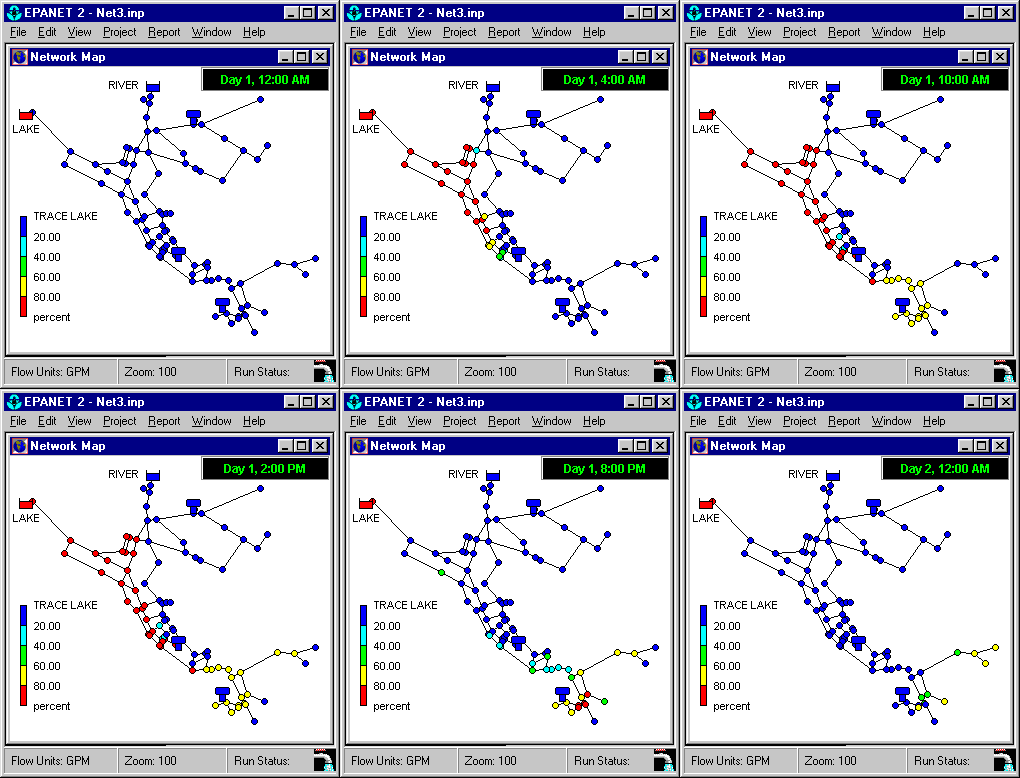
Simple, quick, and useful right out of the gate — designed to open-and-go.
Launch epanet-js now